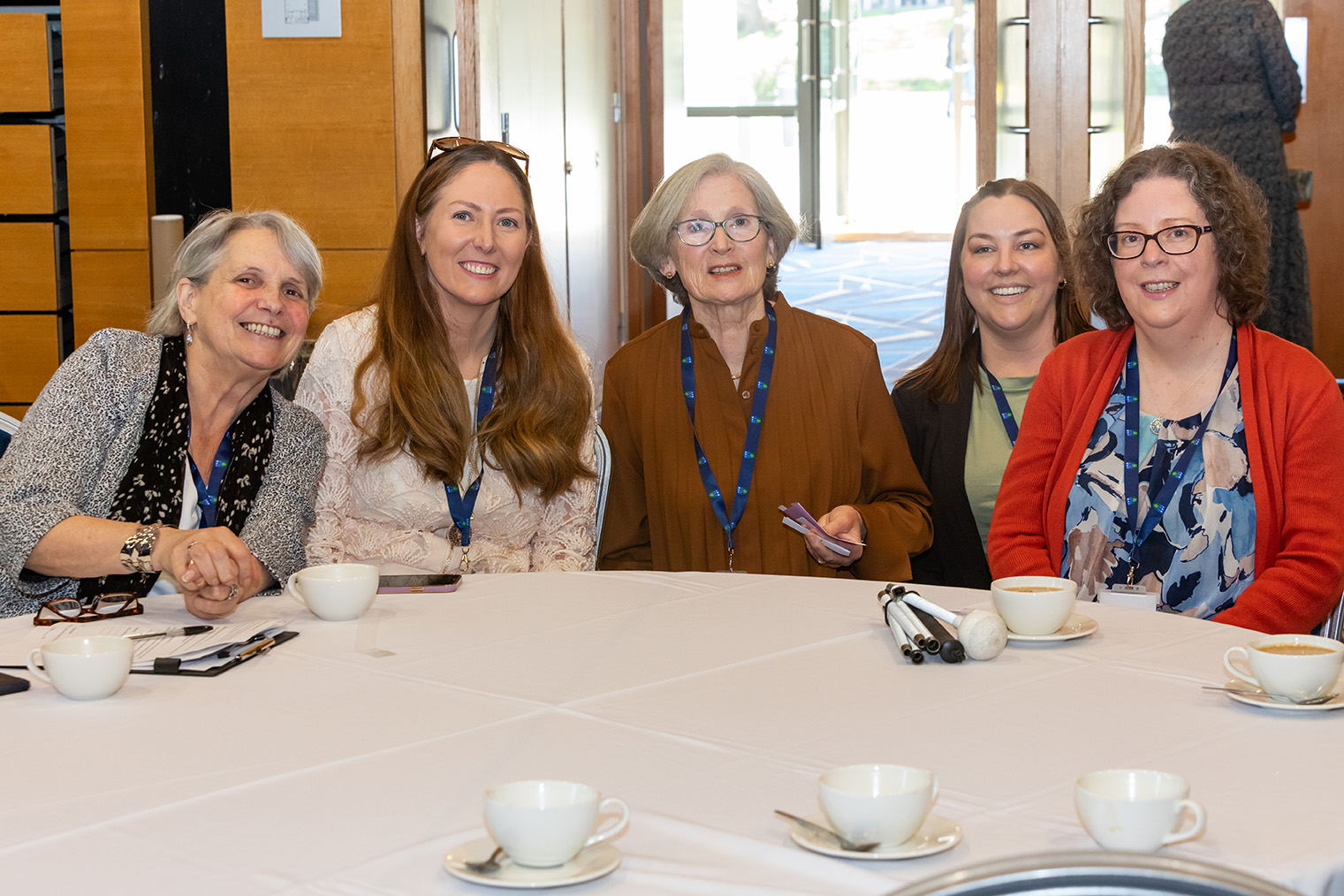
Early collaboration with the RDCTN Conference Crew – five experienced PPI contributors – helped us deliver a welcoming and thoughtfully-considered event that reflected our values of inclusion and collaboration.
Key decisions from this group include:
Patient and public involvement (PPI) review of posters.
Lab visits and site tours to ground the science for attendees.
Co-produced Accessibility Guidance for poster design.
Videos available after the event for those unable to attend.
A pre-conference Zoom and a private PPI Panel WhatsApp group to support networking, communication and support.
Logistics like accommodation, transport, parking, cloakrooms, charging points, and quiet areas were planned and promoted.
Inclusive PPI Workshop
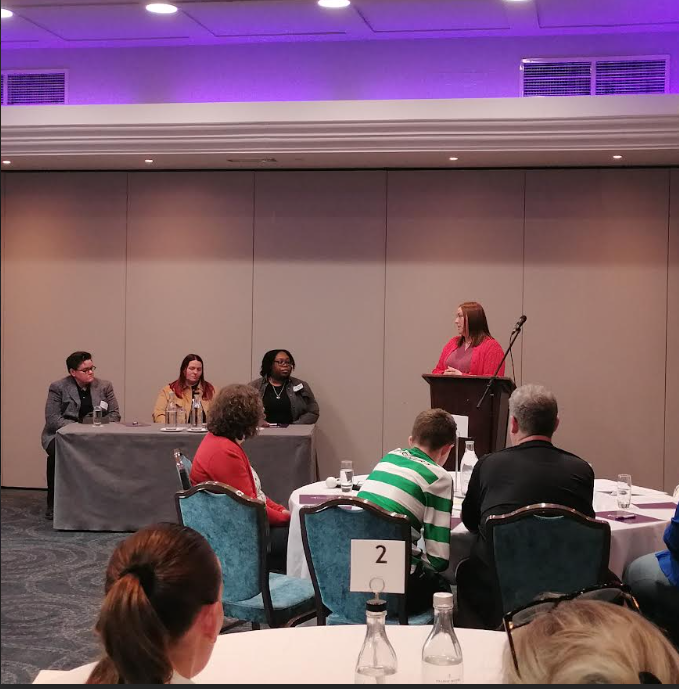
RDCTN and Health Research Charities Ireland co-hosted a workshop on creating inclusive spaces for PPI in rare disease research. It brought together researchers, charity representatives, and PPI contributors for panel discussions, themed breakouts, and open dialogue. Insights from the workshop will shape a practical guide for researchers, ensuring the rare disease community’s perspectives are heard and meaningfully embedded in the design of future research.
In the words of participants:
“I really loved the event, in particular the panel discussion. It was inspiring and motivating and brought very different perspectives than I am used to hearing. The discussions gave me an opportunity to interact with such a diverse group of people, we had very rich conversation.”
Funded by the PPI Ignite Network @ UCD Seed Funding Scheme 2024.
Inside A Rare Disease Lab
The Respiratory Research Lab at the Conway Institute UCD welcomed members of the RDCTN PPI Panel for an open, engaging and hands-on visit. The session began with short presentations from researchers in plain language, followed by a guided tour. The atmosphere was warm and informal and attendees appreciated the chance to “see the science” up close, making the research feel tangible and relatable. In the words of participants:
“It was great to meet the researchers in person. It made the science feel more real and more human.”
“It was a really lovely time, and I believe gave us all a newfound appreciation for the samples we receive and what we do this for.”
Celebrating Impact with Best PPI Poster
Sixteen of the 39 posters submitted described PPI as part of their research approach. These were assessed by four PPI contributors, who spoke directly with the researchers, and used a structured review process. They provided individual ratings and constructive feedback, ultimately selecting the winner of the Best PPI Poster Award based on the quality of engagement and the depth of involvement described.
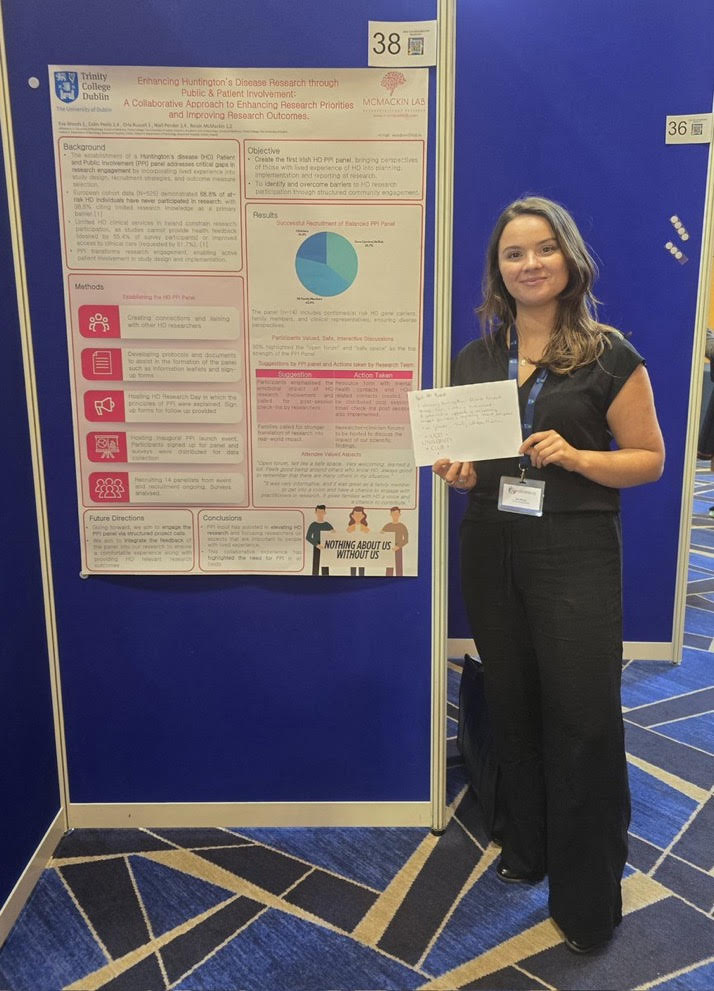
The poster judged to best reflect meaningful PPI was awarded to Eva Woods of Trinity College Dublin for her work with the Huntington’s disease community.
In the words of PPI Reviewers:
“I felt confident in reviewing. Our input was valued and respected.”
“It gave us an opportunity to talk to the researchers about PPI and how it was part of their research. It showed great respect from a lived experience perspective.”
Delegate Perspectives
Feedback from delegates highlighted the value of connection, the richness of discussion, and the importance of visible, meaningful PPI.
In the words of delegates:
“What stood out for me was how much research is going on that the public doesn’t know about, and how knowing it is happening lessens my sense of isolation”.
“I definitely felt a greater sense of connection to other parents and caregivers. It reminded me that we are not alone in this.”
“The outcomes will always be better if real, meaningful PPI can be established and built upon.”
“It was encouraging to hear the perspectives of both families and healthcare professionals. The discussions deepened my understanding and fuelled my passion for advancing translational research amid real-world challenges and opportunities.”
“I am inspired and more committed than ever to contribute to this vital work.”